Every business wants more leads. But what most businesses actually experience is unpredictability. One week, inquiries are flowing. The next week, everything goes quiet. This uncertainty makes it difficult to plan marketing budgets, forecast sales, or scale operations.
This is where a structured Lead Generation Strategy becomes essential. Instead of depending on luck, referrals, or occasional campaigns, businesses create a system that consistently attracts and converts potential customers.
In 2026, buyers are more informed and competition is stronger. Customers research, compare options, and take time before making decisions. A strong lead generation strategy ensures your brand appears at the right moments during this journey.
What Is a Lead Generation Strategy?
A lead generation strategy is a structured plan designed to attract interested prospects and turn them into inquiries or customers. It connects marketing channels, messaging, and tracking tools into one performance-focused system.
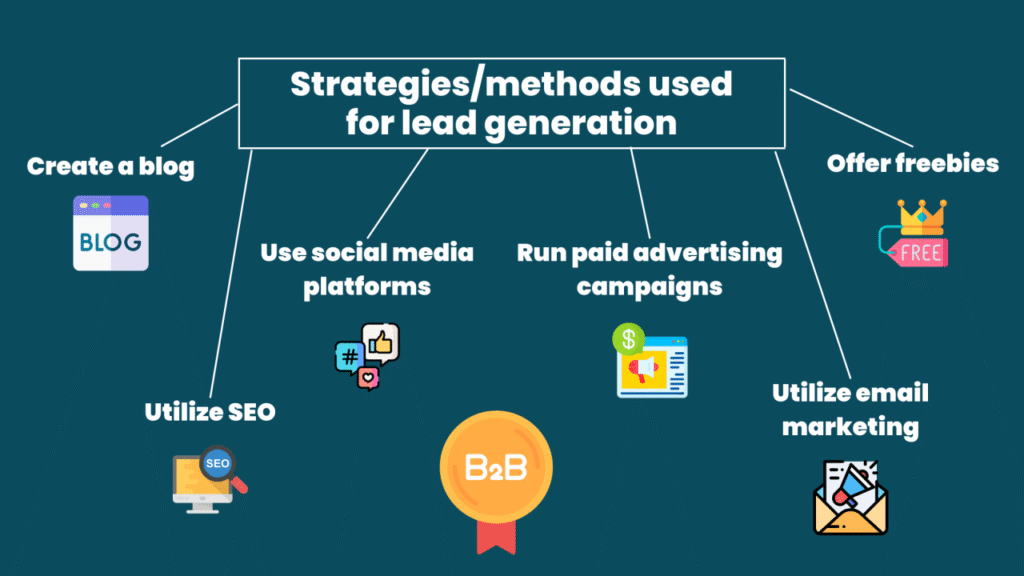
It usually includes:
- Paid advertising
- Search engine optimization (SEO)
- Social media marketing
- Landing page optimization
- Retargeting campaigns
- Performance tracking
Each part works together to create consistent lead flow.
Why Businesses Struggle Without a Lead Generation Strategy
Without a clear strategy, marketing feels random. Businesses try different tactics without structure:
- Posting on social media without goals
- Running ads without tracking
- Relying only on word-of-mouth
This leads to unpredictable results. Some months look good, others don’t.
A proper lead generation strategy answers key questions:
- Where are leads coming from?
- Which channel gives the best return?
- What is the cost per lead?
When these are clear, marketing becomes measurable and scalable.
The 6-Step Lead Generation Strategy Framework
1. Define Your Ideal Audience Clearly
The first step is knowing exactly who you want to reach. Generic targeting leads to poor results.
Define:
- Age group
- Location
- Job role (if B2B)
- Pain points
- Buying behavior
When targeting is clear, ads become more relevant and conversions improve.
2. Select the Right Marketing Channels
Different platforms serve different purposes.
- Google Ads → Captures high-intent search traffic
- Meta Ads → Builds awareness and retargets
- SEO → Brings long-term organic traffic
- Email Marketing → Nurtures leads
A good lead generation strategy balances short-term and long-term channels.
3. Build High-Converting Landing Pages
Traffic alone does not bring leads. Visitors must be guided to take action.
A strong landing page includes:
- Clear headline
- Benefit-driven copy
- Social proof (reviews, testimonials)
- Simple contact form
- Strong call-to-action
Even small changes in landing page design can double conversion rates.
4. Use Retargeting to Capture Lost Visitors
Most visitors do not convert on their first visit. Retargeting reminds them about your offer.
Retargeting ads work because:
- Users already know your brand
- Trust level is higher
- Decision time is shorter
This improves lead quality significantly.
5. Track and Measure Everything
Tracking is the backbone of a lead generation strategy.
Key metrics include:
- Cost per lead
- Conversion rate
- Click-through rate
- Lead-to-sale ratio
Without tracking, you cannot optimize performance.
6. Optimize Continuously
Lead generation is not “set and forget.”
Weekly optimization includes:
- Testing new ad creatives
- Adjusting targeting
- Improving landing pages
- Pausing low-performing campaigns
Consistent improvement leads to long-term growth.
👉 Want a customized lead generation strategy for your business? Book a free consultation.
Common Mistakes to Avoid
- Running ads without tracking
- Sending traffic to homepage instead of landing page
- No retargeting campaigns
- Stopping ads too early
- Ignoring data insights
Avoiding these mistakes improves performance quickly.
Real Business Example
A service-based company implemented a structured lead generation strategy.
Before:
- Irregular inquiries
- High advertising costs
After 3 months:
- 2x more leads
- 35% lower cost per lead
- More predictable sales pipeline
The difference came from structured targeting and retargeting.
👉 Get your free lead generation audit today.
Why Lead Generation Strategies Matter More in 2026
Consumers compare multiple options before choosing. A lead generation strategy ensures your brand remains visible throughout the buying journey.
Instead of hoping for leads, businesses create systems that generate interest regularly.
FAQs
1. What is a lead generation strategy?
A lead generation strategy is a structured system used to attract potential customers and convert them into inquiries or leads. Instead of relying on random marketing activities, businesses use a planned mix of ads, SEO, landing pages, and retargeting to bring consistent results. A good lead generation strategy focuses on identifying the right audience, offering value, and guiding users through a conversion path. At Digital Sky Agency, lead generation strategies are built around measurable goals like cost per lead and conversion rates, ensuring marketing efforts directly support business growth rather than just increasing traffic.
2. Which channel works best for lead generation?
Without a clear lead generation strategy, businesses often depend on referrals or occasional campaigns, which leads to unpredictable sales. A structured lead generation strategy ensures there is a steady flow of potential customers entering your sales funnel. It helps businesses forecast results, allocate budgets wisely, and improve ROI over time. Digital Sky Agency uses data-driven lead generation strategies to create systems where ads, landing pages, and retargeting work together, making growth more stable and scalable.
3. How long does it take to see results?
The best channels depend on the business type and target audience. Google Ads is strong for high-intent searches, Meta Ads are effective for awareness and retargeting, and SEO builds long-term traffic. Email marketing and LinkedIn ads can also play important roles. A successful lead generation strategy combines multiple channels instead of depending on only one. Digital Sky Agency designs multi-channel lead generation strategies so businesses capture both immediate and long-term opportunities.
4. Why is tracking important?
Paid advertising can start generating leads within weeks, while SEO may take a few months to build momentum. However, a lead generation strategy improves over time because data helps optimize campaigns. Testing audiences, creatives, and landing pages gradually reduces costs and increases lead quality. Digital Sky Agency follows continuous optimization to ensure performance improves month after month rather than staying static.
5. Can small businesses use a lead generation strategy?
This usually happens when targeting is too broad or landing pages are not aligned with the offer. A lead generation strategy should not only focus on quantity but also lead quality. Proper messaging, audience filtering, and retargeting help attract serious prospects. Digital Sky Agency ensures lead generation strategies are built to bring qualified leads that match business goals, improving conversion from lead to customer.
Conclusion
A structured Lead Generation Strategy brings consistency to marketing. Instead of relying on luck, businesses build systems that generate steady leads and predictable growth.
Marketing becomes measurable, scalable, and result-focused.
Ready to scale your leads? Start building your strategy today.